
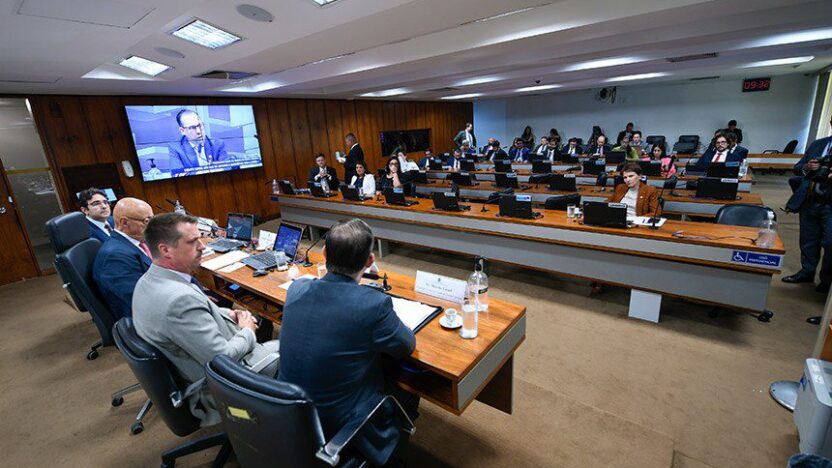
Bill approved by the Economic Affairs Committee
THE Economic Affairs Committee (CAE) of the Federal Senate approved today, December 2, 2025, a bill that aims to increase taxation on online betting houses, known as bets, and also on fintechs, companies that offer digital financial services. The proposal was approved by 21 votes in favor and only one against, demonstrating significant support among the senators present.
The project establishes an increase in the total tax rate charged on the income of betting companies, from 12% to 18%. Initially, the proposal provided for an even greater increase, to 24%, but the project’s rapporteur, senator Eduardo Braga (MDB-AM), opted for a less aggressive adjustment after considering the potential impact on companies already legalized in the country.
Revenue Impacts and Projections
The approved proposal also expands taxation on fintech profits and increases the Income Tax rate on the distribution of Juros on Equity (JCP). These measures are part of a government effort to increase revenue and balance public accounts, especially after the rejection of a provisional measure that aimed to replace the increase in the Tax on Financial Operations (IOF).
Brazil is currently the fifth largest online betting market in the world, which makes taxation of this sector a potentially significant source of revenue for the government. It is estimated that the proposed measures could increase federal revenue by almost R$5 billion next year, although this projection was made based on the initial version of Braga’s opinion, which included a higher tax rate for bets.
Furthermore, the proposal foresees that, by 2028, part of the collection will be intended to compensate for the losses of states and municipalities resulting from the expansion of the Income Tax exempt range, recently sanctioned by President Luiz Inácio Lula da Silva. From 2029 onwards, additional resources raised will be directed to social security.

Political Tensions and Negotiations
During the reading of a new version of the report, Senator Eduardo Braga expressed criticism of the government and the team of the Minister of Finance, Fernando Haddad, accusing them of breaking agreements related to the exemption of dividends calculated in 2025 and distributed until 2028. Braga expressed his discontent, stating that he was “tired” and “outraged” with the Ministry of Finance’s stance.
The government leader in the Senate, Jaques Wagner (PT-BA), intervened to calm tempers, expressing solidarity with Braga and stating that he had not received information about the department’s new position. Wagner decided, without consulting the Ministry of Finance, to request the resumption of the sections dealing with the distribution of dividends, which was accepted by Braga.
Speaking to the press, Jaques Wagner classified the situation as an “embarrassment” and stated that, as a leader, he had to take the “risk” of making decisions without prior communication with Haddad’s team. “It ended up creating an embarrassment, and I thought it was better to take it on. Whoever is a leader has to take this kind of risk”, said Wagner.
Measures to Combat Irregular Betting
In addition to increasing taxation on bets, the project approved by the CAE includes measures to combat betting houses that operate irregularly, without authorization from the Ministry of Finance. One of the proposed initiatives is the creation of an accelerated procedure to remove illegal bets on the internet.
The project also determines that payment and financial institutions share information and monitor signs of fraud in transactions carried out by these irregular companies. This measure aims to protect the legalized market and ensure that financial operations are conducted in a transparent and secure manner.
Taxation of Fintechs and JCP
A smaller part of the estimated collection is related to the increase in the Social Contribution on Net Profit (CSLL), which will affect fintechs. The project foresees that banks will continue to pay the highest CSLL rate, 20%. Credit, financing and investment companies will have a staggered increase: 17.5% in 2027 and 20% from 2028.
Furthermore, the proposal increases the Income Tax rate, charged at source, on the distribution of Interest on Equity (JCP). JCPs are a way of distributing the profits of publicly traded companies to their shareholders, serving as remuneration for the capital invested.
Tax Regularization and Exemptions
The project also addresses issues related to Income Tax exemption for individuals. One of the points discussed was the device that ensures that profits and dividends calculated in 2025 and distributed until 2028 are tax-free. Companies requested a change in the text to adapt to the reality of calculating the financial statement, as the exemption would apply to profits and dividends calculated and with distribution approved until the end of 2025, which they claim is unfeasible, as the balance sheets are only calculated in the following year.
Furthermore, the proposal approved by CAE creates a tax regularization program for taxpayers with monthly income of up to R$7,350. This initiative allows special installment conditions for individuals to settle debts with the Federal Revenue Service and the Attorney General’s Office of the National Treasury (PGFN), offering financial relief to those who face difficulties in meeting their tax obligations.
Source: g1.globo.com
Fonte: Gaming365 – Brasil