

The Brazilian Institute of Responsible Gaming (IBJR) published a harsh note this Wednesday (10) condemning the approval of the Cide-Bets in the Constitution and Justice Committee (CCJ) of the Senate. The entity warns that the new tax on deposits and the possible five-year chargeback could have a devastating effect on the regulated sports betting market in Brazil — while directly strengthen clandestine platforms linked to organized crime.
Cide-Bets creates illegal advantage and pushes bettors into the underground market, says IBJR
The central point of criticism: the Cide-Bets predicts 15% taxation on the bettor’s depositwhich exclusively affects legal operators.
- R$100 deposited turns into R$85 on regulated websites
- On illegal websites, R$100 is still worth R$100
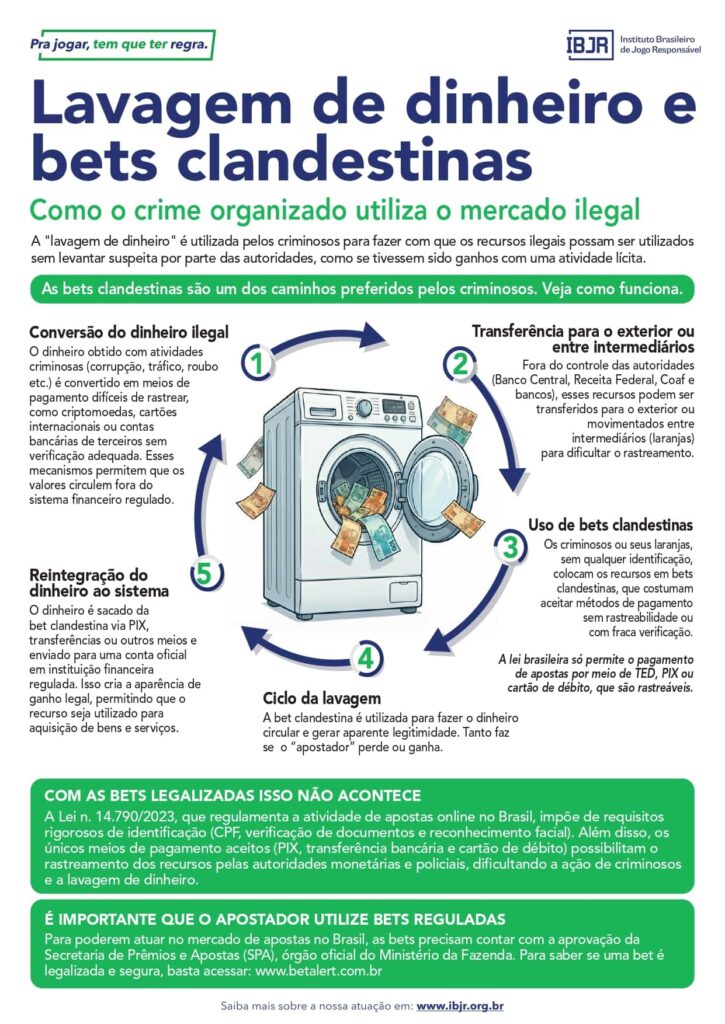
According to IBJR, this is a “unprecedented competitive advantage” delivered to clandestine houses — many of them financed by criminal factions, according to recent PF reports and studies mentioned by the entity.
The measure, according to the Institute, stimulates massive migration of bettors to platforms that do not collect taxes, do not follow rules and are not under supervision.
Illegal market already generates R$ 78 billion per year in Brazil
According to a survey of LCA Consultingcited by IBJR:
- 51% of betting platforms operating in Brazil are illegal
- The clandestine market moves up to R$78 billion annually
- Most of this movement occurs without paying taxes
Meanwhile, the regulated market — responsible for others 49% — is expected to collect around R$9 billion in federal taxes in 2025 alonein addition to ISS, PIS and COFINS.
For the Institute, place a new tax on the formal sector cannibalizes existing revenue and reduces the space of companies authorized by the Federal Government.
“Mathematically impossible” projections overturn Cide-Bets’ economic justification
The government estimates that the Cide-Bets manage R$30 billion per year in revenue.
The IBJR states that the account does not close:
- The regulated sector earns around R$36 billion
- The projection foresees raising almost all company revenuesomething unfeasible
For the Institute, the numbers presented have no technical basis and create a narrative disconnected from the financial reality of the market.
5-year retroactive charge threatens jobs and investments
Another point raised by IBJR is the possibility of retroactively charging taxes relating to the last five years of regulated houses.
The entity highlights that:
- The measure generates legal uncertainty
- It can lead already licensed operators to leave Brazil
- Threat jobs, investments and advertising partnerships
- It harms the recent effort to structure the market under federal regulation
- Sends the message abroad that Brazil is a hostile environment for investments
IBJR: Cide-Bets strengthens factions, weakens the State and harms bettors
The Institute concludes that the combination of Cide-Bets and retroactivity can:
- reduce real revenue
- favor criminal organizations
- harm formalized companies
- push bettors onto dangerous platforms
- compromise public safety
- increase the underground market
- destroy competitiveness of the regulated sector
The IBJR reinforces that taxation must be balanced and aligned with international practices, preserving the legal market — the only one that generates jobs, taxes and security.
Fonte: Gaming365 – Brasil