
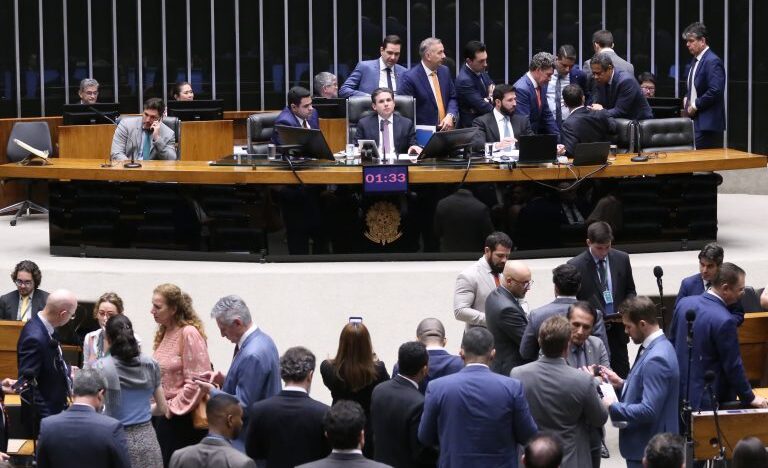
THE Chamber of Deputies approved, this Tuesday (16), the Complementary Law Project (PLP) 128/2025, which reduces federal tax benefits in several sectors by 10% and increases taxation on bets and fintechs. The proposal, authored by deputy Mauro Benevides Filho (PDT-CE), now goes to the Senate for analysis.
The approved text is a substitute for rapporteur Aguinaldo Ribeiro (PP-PB), who also included new rules for transparency and control of results in the Fiscal Responsibility Law (LRF). According to the parliamentarian, the measure seeks to correct distortions in the tax system caused by the “indiscriminate granting” of tax benefits, which, according to him, made the model “unequal, unfair and inefficient”.
Among the main measures, the project increases taxation on fixed-odd bets (bets) from 12% to 13% in 2026, with gradual increases up to 15% in 2028. Half of the additional revenue will be allocated to social security and the other half to public health actions. The text also establishes joint and several liability for companies and institutions that advertise or operate unauthorized betting sites.
In order to tighten supervision, the text provides that those who publish advertising of unauthorized bets or institutions that continue to operate with unauthorized entities after formal communication. Another point is the increase from 15% to 17.5% of income tax at source levied on interest on equity distributed by companies to partners as remuneration of capital.
The measure also generates a linear cut of 10% in several federal tax benefits, such as PIS/Cofins, IPI, CSLL, among others. This cut will only affect the portion of total gross revenue greater than R$5 million in the calendar year.

Other measures
In the financial sector, fintechs and capitalization companies will start collecting 17.5% Social Contribution on Net Profit (CSLL) until the end of 2027 and 20% from 2028. For stock exchanges, market administrators and clearing entities, the rates rise from 9% to 12% by 2027 and 15% from 2028.
The project also limits total tax incentives to 2% of Gross Domestic Product (GDP). If this ceiling is exceeded, the government will be prevented from granting new benefits without presenting compensation measures.
Most of the new rules come into force on January 1, 2026, with the exception of measures that require the so-called noventena — a minimum period of 90 days for the collection of new taxes to begin.
During the plenary debate, deputies from the allied base stated that the proposal is essential to guarantee the balance of public accounts and make the 2026 Budget viable. Opposition parliamentarians criticized the text, claiming that it represents an increase in the tax burden and insecurity for investors.
Fonte: Gaming365 – Brasil