
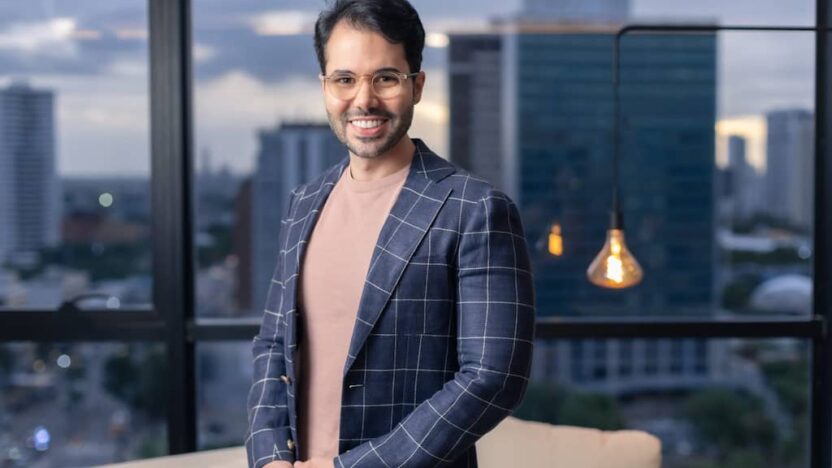
In an exclusive interview with Brazil EconomyDarwin Filho comments on the government’s actions in combating illegal betting and takes stock of the first year of regulation of the sector in Brazil.
Gaming365 selected the main excerpts and insights from the conversation so you can understand the current moment in the market.
👉 The full interview is available at the end of the text.
One Year of Regulation: Transforming the Betting Market
In January, Brazil celebrates the first anniversary of the regulation of the betting market, a significant transformation for a sector that previously operated informally. With regulation, the market became an organized, auditable and integrated economic sector with the real economy. According to Darwin Filho, CEO of Lucky Sportsregulation brought order, governance and responsibility, establishing clear rules, continuous supervision and solid compliance standards, in addition to effective consumer protection mechanisms.
In the economic aspect, the betting sector gained scale and predictability. Studies by LCA Consultores and Cruz Consulting indicate that licensed operators have already invested R$7.5 billion in equity, with a multiplier effect that could reach R$28 billion in other segments of the economy. The estimated revenue of the sector is R$ 22 billionrepresenting around 1% of Brazilian GDP, and has already generated 15,500 formal jobs. These numbers show that regulation has consolidated a sustainable industry with a real impact on the country’s economy.
Challenges in Combating the Illegal Market
Anatel has already blocked 25 thousand illegal betting sites, but the CEO of Lucky Sports highlights that this measure, although relevant, is not sufficient. The underground market is agile and quickly adapts to any blocking attempt, changing its domain, structure and technology. The real challenge lies in the financial flow that supports these illegal operators.
Darwin Filho emphasizes that coordinated action with the financial system is crucial to combat the illegal market. Payment providers, payment institutions and banks play a central role in identifying, blocking and reporting suspicious transactions. When this ecosystem works rigorously, the illegal market loses strength. However, without full traceability and rigorous control, combating the illegal market becomes just a superficial effort.
Monitoring and Inspection: Advances and Opportunities
Despite advances in monitoring and financial inspection of irregular platforms, there is still a long way to go. Integration between licensed operators, financial institutions and the regulator has improved, enabling faster identification of suspicious patterns. However, the public policy of financial containment of the illegal market has not yet achieved the necessary efficiency.
The main challenge remains the ability of illegal operators to move quickly, exploiting technological and regulatory loopholes. To disrupt the informal payment system that supports these operations, it is essential to expand the automation of alerts, standardize verification protocols and intensify intelligent data sharing between the actors involved.
Transparency and Integrity in Sport
Regulation of the betting market has brought more transparency, increasing the ability to identify attempts to manipulate results. Cases that previously went unnoticed are now detected more quickly and with adequate documentation, contributing to the integrity of the sporting environment. The exposure of these cases is positive, as it inhibits new practices and pressures sports institutions to adopt stricter governance standards.
Regarding the increase in taxes for betting houses, Darwin Filho warns that the discussion should focus on the total effective burden, not just the nominal value of the rate. Brazil already has one of the highest regulatory costs in the world, and any mismatch could favor illegal operators. The sector understands its role and contribution, with an expected revenue of R$9 billion for 2025, but it needs stability and predictability to continue generating jobs and investments in a sustainable way.
Economic Impact and Sports Sponsorships
The betting sector has a concrete contribution to government revenue, with an estimated R$9 billion in taxes for 2025. Furthermore, it boosts technology, advertising, data, streaming and events chains, employing 15.5 thousand formal professionals with an average salary of R$7,000.00. Sports sponsorships were also taken to a new level, with a more rational market and contracts based on return metrics and a long-term vision.
Although in Europe there are movements to restrict betting sponsorships, in Brazil, the context is different. Sponsorship is a fundamental part of sport financing, and the country has found a balance between clear rules, responsible communication and supervision. Any debate on restrictions must consider the economic impact and the sector’s structuring contribution to national sport.
Perspectives for the Future of the Sector
The year 2026 will be one of consolidation for the betting market in Brazil, with a focus on strengthening the foundations established in the first year of regulation. More integration with the financial system, greater sporting integrity, more governance and advances in responsible gaming are expected. The World Cup should bring an unprecedented volume of new users, and the difference will be in the companies’ ability to retain these players with responsibility and a personalized experience.
The betting sector continues to evolve, seeking a balance between economic growth and social responsibility. With the regulation, Brazil positioned itself among the countries with the most robust responsible gaming protocols, offering deposit limits, self-exclusion and behavioral monitoring. Strengthening the regulated environment is essential to protect consumers and ensure a fair and transparent market.
“Following the money is more effective than taking down websites.” – Darwin Filho, CEO of Esportes da Sorte
Read the full interview: brazileconomy.com.br
Fonte: Gaming365 – Brasil