
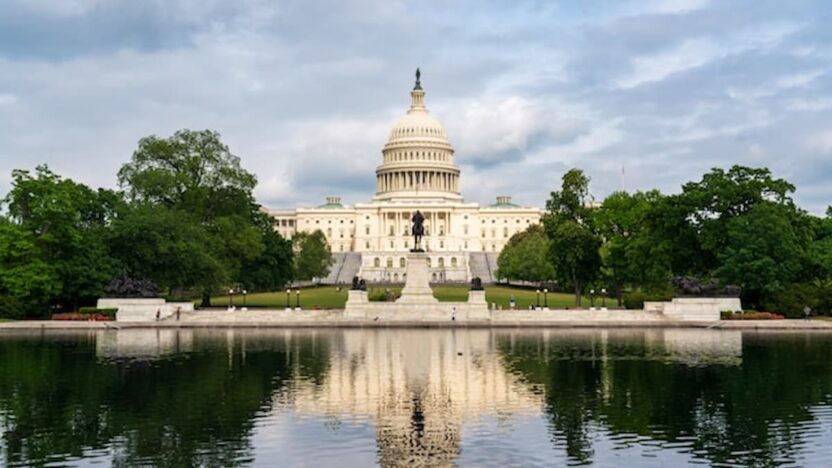
Republican Party leaders in the United States House of Representatives blocked another attempt by the congresswoman Dina Titusof Nevada, to restore the tax deduction for 100% of gambling losses. As a result, the current limit of 90%established by the new federal tax legislation.
The most recent initiative occurred after the sanction by the president donald trumpof the budget package known as One Big Beautiful Billin July, which officially reduced the maximum allowable deduction for betting and gaming losses.
Republican leadership prevents debate and voting
According to Titus, Republican leadership prevented his amendment to the federal funding bill from even being debated or voted on. The deputy stated that she presented the proposal again this week, but that the text was blocked before advancing in the plenary.
In a publication on the X network (formerly Twitter), in February 2Dina Titus criticized the decision and reinforced that she will continue to fight for the reversal of the rule.
The proposal had gained traction the previous month, when it was included as part of the Chamber Resolution No. 7148the federal government’s main spending project. Despite the bipartisan supportnone of the amendments were incorporated into the final text, approved in January 22 without restoring the full deduction.
Trump officially signed the law into law in February 3which means that any correction will now depend on new legislation in the Senate or a future project.
Other proposals remain blocked in Congress
In July, Dina Titus also presented the FAIR BET Law (Fair Accounting for Income Realized with Betting Earnings Taxation), which seeks to ensure that players are only taxed on their real net earnings. However, the project did not advance and did not even receive a hearing in the House Ways and Means Committee.
Other parliamentarians tried alternative paths. In January 8the deputies Steven Horsford and Max Miller presented the FULL HOUSE Lawwhich proposes reverting the Federal Revenue Code to the pre-2025 model. In the Senate, the proposal is sponsored by Senator Catherine Cortez Masto.
In addition, Republican parliamentarians also filed the WAGER Actwhich follows the same correction line as the 90% limit. To date, none of these initiatives have made concrete progress.
Why does the 90% threshold generate so much controversy?
With the current rule, players may be required to pay income tax even without real profit. This happens because only 90% of losses can be deducted, while 100% of gains continue to be taxed.
In practice, the model works like this:
A gambler who declares $100,000 in winnings and records $100,000 in losses can only deduct $90,000.
The remaining $10,000 is taxed even without any net income.
Critics claim that the change:
- Discourages professional gamblers and high-volume gamblers
- Encourages migration to illegal offshore markets
- Reduces revenue from licensed casinos
- Creates tax distortions considered unfair
Defenders of the current rule, on the other hand, minimize the impact. The senator James Lankforda member of the Finance Committee, classified the correction as a “very small change” in tax policy.
Chances of reversal continue to fall
Prediction market platforms such as Kalshifollow the topic closely. In early January, the probability of the limited deduction being revoked in 2027 was estimated at about 60%. After the failure of the spending project, this number fell to less than 40%.
With the Chamber’s efforts at a standstill, the focus now turns to United States Senate. Despite this, advocates of change insist that the agenda is not yet closed.
For now, the limit of 90% gambling loss deduction remains in effectand any change will depend on a new political impulse in the American Congress.
Fonte: Gaming365 – Brasil