
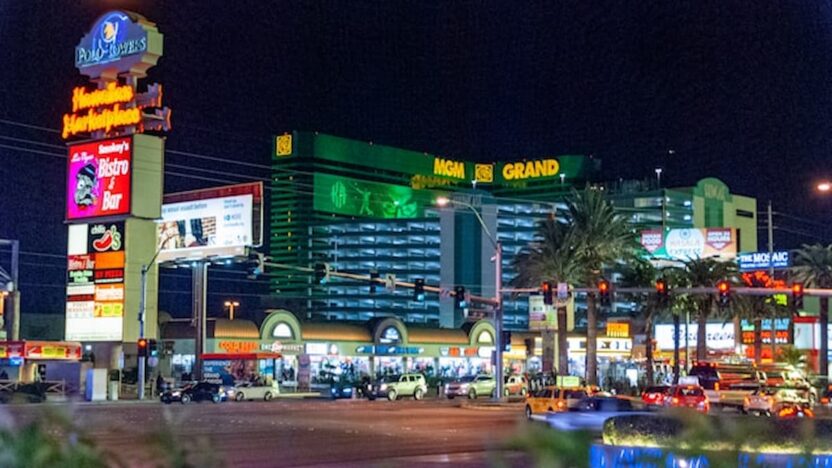
The business of MGM Resorts in Las Vegas remained under pressure in the fourth quarter, but the company made it clear that no longer depends exclusively on Strip to sustain its results. Instead, the growth of BetMGM and the strong recovery of Macao compensated for domestic weakness, ensuring a better-than-expected closing of 2025.
This balance was evident in the earnings call, where executives avoided talking about “recovery” of Las Vegas and preferred the term “stabilization”. At the same time, they highlighted the profitability of digital and expansion in China as the main drivers of EBITDA growth in the quarter.
For those who follow the company’s trajectory throughout the year, the fourth quarter seems less like an abrupt turnaround and more like the consolidation of an ongoing strategic change: digital has matured, BetMGM has started to generate cash and international operations have gained real weight in profits.
Fourth quarter results exceed expectations
THE MGM delivered a solid performance in the fourth quarter, with growth in revenue, profit and EBITDA, even with Las Vegas still under pressure.
The company reported consolidated net revenue of US$4.6 billionan increase of 6% in the annual comparison, and net profit of US$294 million. THE Consolidated adjusted EBITDA reached US$635 millionan increase of 20%, while the adjusted earnings per share was US$ 1.60.
The numbers easily exceeded market expectations, which projected around US$4.44 billion in revenue and an adjusted EPS of close to US$0.64 — one of the biggest positive surprises of the year for the company.
CEO Bill Hornbuckle summarized the quarter as a direct reflection of the group’s diversification:
“MGM Resorts once again demonstrated the benefits of a diversified operating strategy, delivering 20% growth in adjusted EBITDA despite headwinds in Las Vegas.”
2025: Stability with sources of growth outside the Strip
In 2025, the numbers reinforce that the fourth quarter’s performance was not an outlier.
MGM ended the year with US$17.5 billion in revenuegrowth of 2%, and Adjusted EBITDA of US$2.43 billionup 1%. Adjusted earnings per share rose to $3.31compared to US$2.59 the previous year.
The modest growth reflects clear dynamics: Las Vegas remains weaker, while Macau, regional markets and digital support results.
The division by segment makes this difference evident:
Las Vegas Strip: EBITDAR of US$2.86 billion, down 8%
MGM China (Macau): EBITDAR of US$1.20 billion, up 11%
Regional markets: EBITDAR of US$1.16 billion, growth of 2%
Digital: loss of US$90 million, greater than the previous year
In summary, Vegas remains the pressure pointwhile Macau and non-Strip markets increasingly carry the group’s performance.
The turnaround throughout the year: from digital losses to BetMGM’s cash flow
The fourth quarter crowned an evolution that had been taking shape since mid-2025.
In the second quarter, digital was still an investment under construction. BetMGM was beginning to show initial signs of profitability, but the consolidated online segment was still operating in the red, while Las Vegas was facing renovations and falling traffic.
In the third quarter, BetMGM started to generate positive EBITDA, around US$41 million, but this progress was overshadowed by the sharper worsening of the Strip.
In the fourth quarter, the scenario changed more clearly. BetMGM maintained profitability and began returning cashdistributing around US$270 million to its controllers. At the same time, Macau accelerated and the declines in Las Vegas lost strength.
According to CFO Jonathan Halkyard:
“The business of BetMGM continues to grow profitably, with distributions that now represent a new recurring cash flow for the company.”
Las Vegas: still weak, but stopping to get worse
The numbers show that the Strip continues to shrink year-on-year, but with sequential improvement.
In the third quarter, revenue was US$1.99 billion, down 7%, and EBITDAR fell 18%. In the fourth quarter, revenue rose to US$2.17 billion, down less than 3%, while EBITDAR fell just 4%.
The administration avoids talking about resumption. The speech is gradual stabilizationnot recovery.
“We ended 2025 with Las Vegas showing signs of stabilization and an improving trajectory,” Hornbuckle said.
Macau takes leading role in growth
If Las Vegas still inspires caution, Macau is the absolute highlight of the portfolio.
In the fourth quarter, MGM China recorded US$1.24 billion in revenuegrowth of 21%, and EBITDAR of US$334 millionup 31%. The company highlighted market share gains and margin expansion, in a much more confident tone than that adopted for the American Strip.
Financial market remains cautious
The analysts’ reaction reflected this balance between strengths and weaknesses.
Institutions such as Stifel, JPMorgan, Bank of America and Citizens Financial maintained neutral or cautiously positive assessments, recognizing the evolution of digital and Macau, but still seeing Las Vegas as the main risk variable.
This reading was also reflected in the market. Despite the strong result, MGM shares closed the day down 1.76%, at US$36.28, recovering slightly in the following session. The movement indicates that the quarter was seen as solid, but not transformative.
Conclusion
MGM’s message is pragmatic. Las Vegas remains profitable, but under pressurewhile BetMGM and Macau assume an increasingly relevant role in the consolidated result.
The trajectory throughout 2025 makes this clear: digital losses at the beginning of the year, profitability in the middle and effective cash generation at the end. This change reduced dependence on Strip and strengthened the group’s diversification.
For investors and analysts, diversification works as an important buffer — but until Las Vegas returns to consistent growth, caution should remain the dominant tone.
Do you want to understand how to access international assets linked to this new global investment axis?
Fonte: Gaming365 – Brasil