
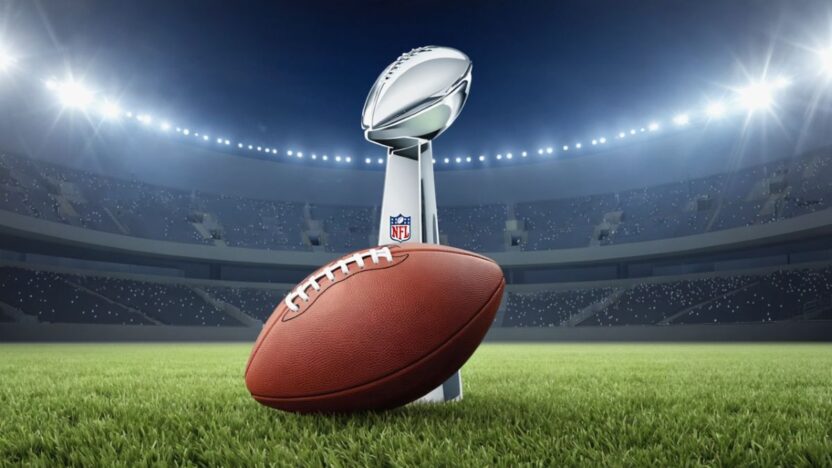
A few days before the Super Bowl — the biggest sporting and betting event of the year in the United States — the NFL signaled a possible change in stance regarding the so-called prediction marketsa model that mixes financial elements and betting, but that operates outside the traditional ecosystem of sports betting houses.
The topic gained strength after statements by Jeff Miller, executive vice president of the NFL, during an interview with Front Office Sportsin San Francisco, host city of the Super Bowl. According to the executive, the league began to see these platforms not only from the perspective of regulatory risk, but also as fan engagement tools.
“There’s no doubt we’ll be spending a lot of time talking about this over the next few months, maybe even years. It’s a fan engagement tool, and that’s been a positive for the league,” Miller said.
The speech draws attention because, historically, the NFL has kept its distance from prediction markets, especially after embracing the regulated sports bettingseen as a safer path from a legal and institutional point of view.
What are prediction markets — and why they generate controversy
Prediction markets allow users to trade contracts based on future events — such as sports results, elections or economic indicators — functioning more like contract exchanges than like traditional betting.
For the NFL, the problem has always been regulatory. In December, Miller reinforced this concern in official testimony to the US Congress, warning that many of these sports contracts are offered in states where sports betting is not legalescaping the oversight of state regulators.
“These contracts are beyond the reach of state regulatory authorities and the safeguards imposed on the sports betting industry,” Miller wrote to the House Agriculture Committee during a CFTC hearing.
NFL commissioner Roger Goodell had also expressed caution:
“It’s not something we’re about to get into. We’ll watch how this develops.”
Changing regulatory environment
Despite the historically conservative discourse, the scenario began to change. Recent changes in leadership CFTC and a more permissive stance towards new financial products have reignited the debate on the legality and the future of sports prediction markets.
This movement explains the NFL’s more open tone, even without formal endorsement of the platforms.
Chris Christie sees internal resistance in the NFL
Former New Jersey governor Chris Christie — a central figure in the overthrow of PASPA, which paved the way for the legalization of sports betting in the US — commented on the topic in an interview with CBS News.
According to him, the NFL still maintains institutional resistance, evidenced by the blocking of advertisements from prediction markets during NBC’s broadcast of the Super Bowl.
“I don’t think the boss (Roger Goodell) is convinced of that yet,” Christie said.
Kalshi attracts attention, but numbers require caution
Interest in prediction markets has grown along with the NFL playoffs. In January, the application Kalshi reached approximately 3 million downloadsa higher number than that recorded in the same period by giants such as DraftKings and FanDuel.
Despite this, experts warn that downloads do not equate to financial volume or ongoing engagement.
“Many users download out of curiosity, make one operation or none, and don’t come back,” explained Jordan Bender, an analyst at Citizens.
Still, the volume caught the market’s attention, especially as it is a platform that is not a traditional sports betting house.
Off-TV Marketing Strategies
Although prohibited from advertising during the national Super Bowl broadcast, prediction platforms have found alternatives. Kalshi, for example, launched a partnership with Venmoallowing users to fund accounts directly through the payments application.
Alerts on states and risks to the consumer
The growth in interest has also led state officials to issue warnings. Attorneys general in Arizona and New York have warned consumers about the risks of these markets, classifying them as unregulated operationswithout the same protections as legal sports betting.
Another sensitive point is the minimum age: while bookmakers require 21 years of age in many states, several prediction markets allow users aged 18 and over.
“They may appear similar to regulated betting, but they lack adequate consumer protections,” Arizona’s official statement said.
Why this matters for the Brazilian market
Although this debate is centered in the United States, it serves as a global regulatory thermometer. Prediction markets test the boundaries between betting, financial derivatives and digital engagement — a topic that will inevitably reach other jurisdictions, including Brazil.
For operators, investors and regulators, the message is clear: new models are emerging faster than laws can keep up. And, as has already happened with sports betting, those who anticipate the debate tend to come out ahead.
Conclusion
The NFL has not yet officially embraced prediction markets, but the softer tone adopted on the eve of the Super Bowl indicates that the issue is no longer just a regulatory threat and has become part of the league’s strategic debate.
For investors and operators in the sector, the movement signals increased attention: This is a growing segment, with strong technological and engagement appeal, but which remains surrounded by legal and institutional uncertainties — especially outside the traditional regulated sports betting ecosystem.
Fonte: Gaming365 – Brasil