
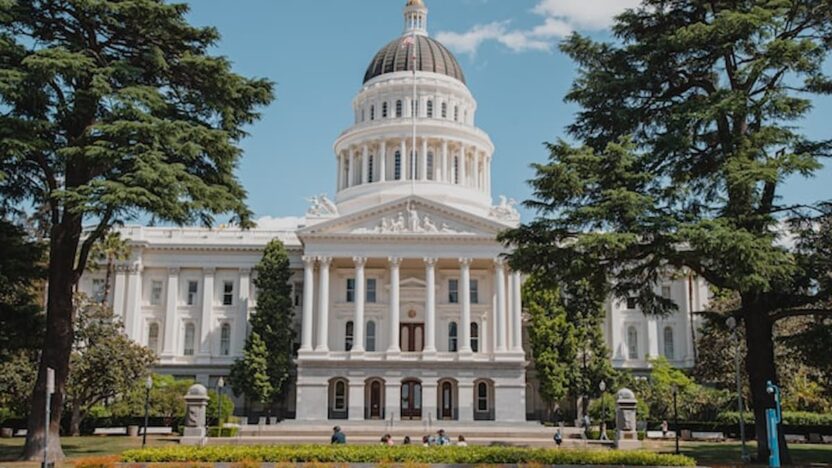
California regulators approved new rules that ban games blackjack style in cardrooms (commercial gaming rooms) and impose stricter restrictions on the operations of third-party “player-dealer” services, known as TPPPS (Third-Party Proposition Player Services).
The measures were approved by the state’s Office of Administrative Law after a proposal from the California Department of Justice, through the Bureau of Gambling Control. The new rules come into force on April 1, 2026with deadlines for adaptation later this year.
The decision is seen by part of the market as reinforcing the exclusivity of casino games operated by indigenous tribes in the state.
What changes with the new rules
The new regulation is straightforward:
“Any blackjack game will not be approved for play.”
The rule defines blackjack by its mechanics — not just its name — including:
- Bets against a player-dealer
- Objective of reaching 21 points
- Use of traditional playing cards
- Hit, stop and pop structure
By regulating the structure of the game, the state blocks both traditional blackjack and similar variations that were being explored in cardrooms. For many operators, these games were among the main revenue generators.
Stricter rules for TPPPS
The second package of rules changes the role of TPPPS, companies that traditionally provide the “bank” in games.
From April 2026:
- The player-dealer position must be offered to customers before each hand
- The role must rotate to at least two players not linked to TPPPS every 40 minutes
- The game must be terminated if the rotation does not occur
- Only one TPPPS can act per table
- TPPPS will not be able to settle bets when not acting as a player-dealer
Operators claim that the new requirements make some gaming models commercially unviable.
Estimated economic impact
The Assessment of Regulatory Impact of the state projects:
- Annual loss of $464 million in revenue for cardrooms
- Estimated gain of $232 million for tribal casinos
- Average reduction of 364 full-time jobs per year
- More than 3,600 jobs affected over a decade
Political and municipal reaction
Several legislators and municipal authorities spoke out against the changes.
State Rep. David Tangipa warned of the impact on cities like Fresno, noting that a single game room can generate more than $1 million a year in tax revenue.
Some California cities rely heavily on revenue from cardrooms:
- Hawaiian Gardens – about 70% of the general fund
- Bell Gardens – approximately 50%
- Commerce – around 40%
Local authorities say cuts could affect essential services, such as public safety and emergencies.
Unions also warned of job losses and reduced tax revenue across the state.
Support of indigenous tribes
The California Nations Indian Gaming Association supported the new rules, calling them a necessary step to reinforce the exclusivity of casino-style banking games on tribal lands.
Tribal groups say the move helps preserve California’s voter-approved model, which gives federally recognized tribes the exclusive right to operate banked casino games.
Context: broader regulatory tightening
The new rules are part of a broader move by California to restrict products considered similar to traditional casino games outside of tribal lands.
In recent months:
- The state attorney general has declared Daily Fantasy Sports (DFS) formats illegal under state law.
- “Sweepstakes” casinos with a dual-currency model have been banned.
- “Racing on Demand” slot machines were seized after questions about their legality.
- Tribes have sued platforms like Kalshi and Robinhood for offering contracts tied to sporting events, claiming they operate as sports betting in disguise.
Although some court decisions have been favorable to commercial operators, the new regulations demonstrate that the state intends to define stricter limits administratively.
What does this mean for the industry
The new regulations reinforce a clear line in California: Products that resemble banking or casino games tend to be restricted outside of tribal operations.
For commercial operators, the scenario indicates a more rigorous regulatory environment. For the tribes, it represents the strengthening of the exclusivity model approved in the state.
The development is closely watched by the iGaming industry and betting in the United Statesas decisions in California often influence regulatory debates in other states.
Fonte: Gaming365 – Brasil