
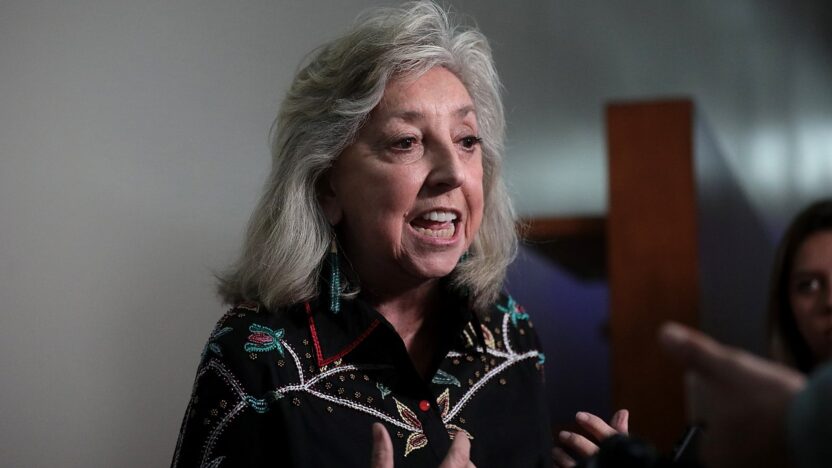
The US congresswoman Dina Titusrepresentative of the state of Nevada, announced that he intends to introduce a bill to prevent prediction market operators — such as Kalshi and Polymarket — from offering contracts linked to sporting events or activities similar to casino games.
According to Titus, these platforms should not use federal regulatory structures to circumvent state gaming laws. In a post on social media, the parliamentarian stated that consumers “deserve transparency, responsibility and protection”.
The proposal was called the “Fair Markets and Sports Integrity Act”.
Regulatory dispute in the United States
The announcement comes amid a growing dispute between US states and prediction market operators. Several lawsuits are underway to determine whether or not these platforms can offer contracts based on sports results, such as the Super Bowl or the NCAA Tournament.
Furthermore, the chairman of the Commodity Futures Trading Commission (CFTC), Mike Selig, recently indicated that the agency may establish new rules allowing contracts tied to sporting events — a move that further expanded the regulatory debate.
The industry’s expectation is that the United States Supreme Court will be the final arbiter of the matter. However, experts estimate that a definitive decision could take years, considering that the processes are still in the early stages.
Challenges in Congress
Although presenting a bill is relatively simple, its approval is a complex process. Currently, the House of Representatives has a narrow Republican majority, while Titus is a Democrat.
Even if the project advances in committees, it would be unlikely to be approved as an isolated measure in 2026. Historically, gaming-related proposals often face extensive negotiations in Congress.
Another example cited is a project defended by Titus to restore the full deduction of gambling losses in federal income tax — a proposal that is also facing difficulties in moving forward.
Market impact and industry reaction
Part of betting industry looks at prediction markets as a trading alternative for bettors facing limits at traditional bookmakers. Platforms of this type work like exchanges, allowing users to buy and sell positions based on the probability of certain events occurring.
On the other hand, critics claim that these contracts come close to traditional sports betting, which could violate state legislation.
The discussion also took on a political tone after former President Donald Trump’s administration adopted a stance in favor of expanding prediction markets. The issue stopped being just regulatory and started to involve partisan disputes in Washington.
What to expect
Regardless of the progress of Dina Titus’ bill, defining the legality of prediction markets in the United States is likely to take time. The scenario involves Congress, federal regulators, state governments and possibly the Supreme Court.
For the iGaming and sports betting sector — including in Brazil — the outcome of the case is closely monitored, as it could influence global discussions about hybrid models between traditional betting and financial markets based on sporting events.
Fonte: Gaming365 – Brasil