
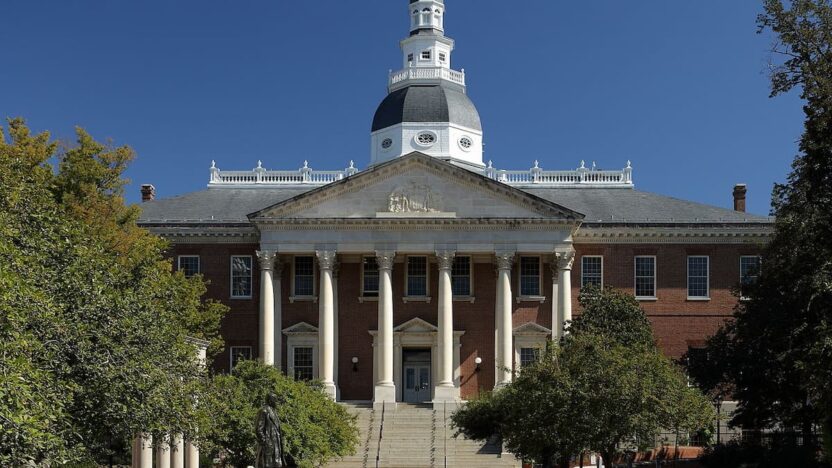
The state of Maryland (USA) scored for March 11 public hearings to discuss a package of bills that could change the future of online gambling in the state.
Texts include:
- Authorization of online casino (iGaming)
- Regulation of multistate online poker
- Carrying out a mandatory popular referendum
- And a separate project that can ban sweepstakes casinos (draws)
For those who follow the betting and iGaming sector in Brazil, the debate is relevant because it shows how American states they are dealing with digital expansion and the sweepstakes model — which is also gaining regulatory attention.
🎰 Project wants to release online casino in Maryland
SB 885 creates an official framework to authorize:
- Online slots
- Table games (blackjack, roulette, etc.)
- Live dealer
- Bingo online
Regulation would be the responsibility of the Maryland Lottery and Gaming Control Commission.
Main points:
- License: US$1 million ($500,000 for live dealer operator only)
- Validity: 5 years
- Land-based casino operators and sports betting licensees can request
- Revenue intended for public education
- Requires “labor peace” agreement (union protection in the first 5 years)
An important detail: the project does not yet define the tax rate about iGaming.
Measures to reduce the impact on physical casinos were also included, such as:
- Annual studies on possible “cannibalization”
- Support fund for affected employees
- Strict responsible gaming rules
♠️ Online poker can operate in a multi-state model
THE SB 884 treat the online poker separatelyclassifying it as a “skill-based game” and not a casino.
This allows Maryland to join the multistate poker agreementsharing players with other states — something essential to maintain liquidity and large tournaments.
Main points:
- US$1 million own license
- Operator keeps 70% of profits
- Mandatory authorization for poker
- Allows interstate agreements
This model already exists in states like New Jersey and Michigan.
🗳️ The final decision will be up to the voters
In Marylandany game expansion needs to go through popular vote.
SB 761 calls for the question to be placed on the November 2026 election.
The question would basically be:
“Are you in favor of expanding commercial gaming to authorize online gaming, including funding for public education?”
In other words: even if projects advance in the Legislature, nothing comes into force without voter approval.
🚫 Sweepstake casinos are also in the spotlight
In addition to the expansion, another project (SB 652) seeks ban illegal online gamesincluding the so-called sweepstakes casinos.
What are sweepstakes?
These are platforms that use:
- Dual Currency System
- Indirect conversion into cash or prizes
- Simulation of slots, bingo or casino games
The project:
- Allows “cease and desist” orders by Attorney General
- Requires blocking by payment processors
- Provides civil and criminal sanctions
- Authorizes confiscation of profits
According to local authorities, 75 notifications have already been sent against operators of this model.
📉 History of failed attempts
Senator Ron Watson has tried to approve iGaming for the past three years, but has faced resistance due to:
- Concerns about job losses at land-based casinos
- Fear of cannibalization
- Hesitation in the Senate
This year, projects have been adjusted to include:
- Labor protections
- Compensation Funds
- More favorable structure for existing operators
📌 What can happen now?
All four projects will be analyzed by the Senate Budget and Taxation Committee on March 11.
If they advance:
- They can move on to a new commission
- Then vote in the Senate
- If approved, they will go to a popular referendum
The ban on sweepstakes has a greater chance of immediate advancement, as similar proposals have previously passed the Senate.
🎯 Why does this matter for the market?
Maryland could become another American state with regulated iGaming — expanding the digital market in the USA.
At the same time, the movement against sweepstakes shows that the regulatory clampdown is tightening on alternative models.
For global operators and investors in the sector, the message is clear:
either it fits into the regulated model, or the space can close quickly.
Fonte: Gaming365 – Brasil