
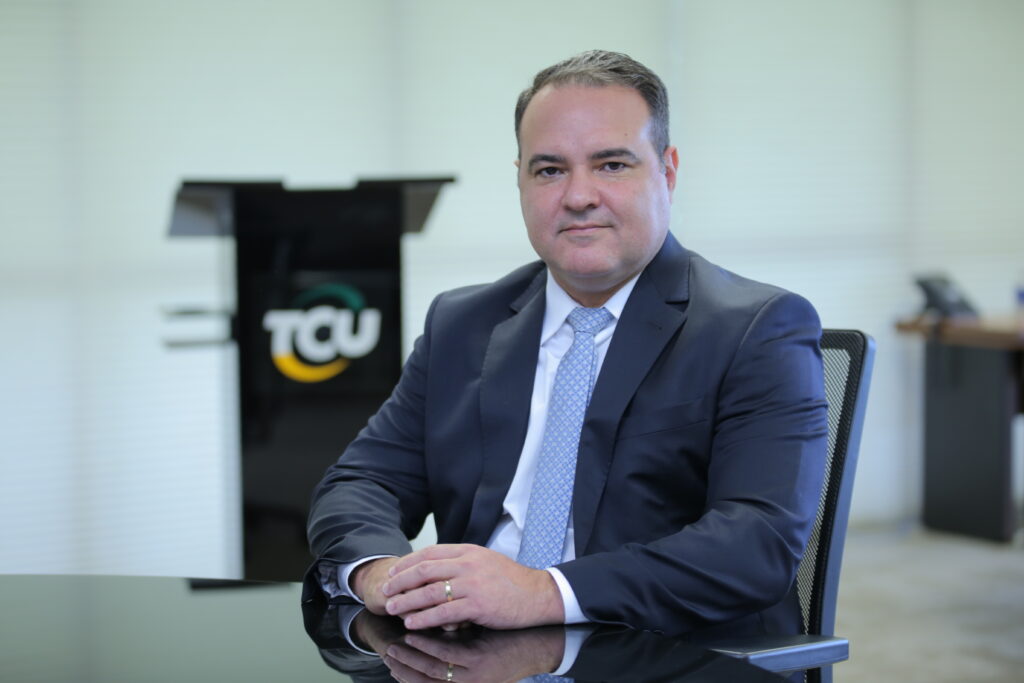
THE Union Court of Auditors (TCU) pointed out flaws in the mechanisms to combat illegal betting in Brazil and warned of the risks of money laundering, manipulation of sports results and tax evasion in the betting market. The conclusions are part of a operational audit reported by minister Jorge Oliveira, released this Monday (19).
According to the TCU, illegal operators represent between 41% and 51% of the total volume of bets made in the country, moving up to R$40 billion per year. The Court evaluated the controls adopted by the public administration to prevent and combat money laundering associated with online betting, in addition to the performance of the National Strategy to Combat Corruption and Money Laundering (ENCCLA) in coordinating policies to prevent and combat money laundering and terrorist financing.
“Based on this work, the TCU seeks to contribute to the Brazilian state being able to act more effectively in combating money laundering practiced through virtual games and betting, with the consequent reduction of related illicit activities, such as tax evasion”, stated Jorge Oliveira.
The audit highlights the accelerated growth of the betting sector in Brazil. In the first half of 2025 alone, gross revenue from bets — the difference between the amounts bet and the prizes paid to users — reached R$17.4 billion. During the period, federal tax revenue totaled R$3.8 billion, in addition to R$2.14 billion in social allocations.
The report also shows that around 17.7 million Brazilians placed bets on authorized platforms in the period, with an average monthly expenditure of R$164 per user. For the Court, the numbers highlight the risk of addiction and debt among the population.
The minister-rapporteur also drew attention to the impact of betting among beneficiaries of the Bolsa Família Program. According to data from the Central Bank of Brazil cited in the report, program beneficiaries spent R$3 billion on online betting in August 2024 alone, an amount equivalent to 21% of the resources paid by the program that month.
Another point highlighted by the TCU is the activity of illegal platforms, including games such as Fortune Tiger, popularly known as “Tgrinho”. According to Jorge Oliveira, the irregular operation of these platforms encourages fraud and exposes users to scams through the manipulation of algorithms.
The audit identified weaknesses in the coordination between bodies responsible for supervising the sector. Among the main problems highlighted are the absence of formalized protocols for sharing information, the lack of integrated actions to block and punish irregular operators and technical limitations of the Prizes and Bets Secretariat of the Ministry of Finance.

According to the Court, SPA still has structural difficulties in monitoring illegal domains, acting reactively, based on complaints and manual searches. The report also mentions slowness in the processes for identifying irregular operations and a lack of integration with state databases.
“The main weaknesses identified were the absence of formalized protocols for sharing information between bodies and the lack of integrated actions to block, monitor and sanction irregular operators”, highlighted Minister Jorge Oliveira, rapporteur of the process at the TCU.
As a result of the inspection, the TCU recommended that the SPA implement a permanent inter-institutional coordination mechanism in the fight against illegal bets, with the participation of the National Telecommunications Agency (Anatel), the Central Bank, the Financial Activities Control Council (Coaf), the Brazilian Federal Revenue Service and criminal prosecution bodies.
The Court also recommended that SPA and Anatel improve technological instruments for identifying unauthorized platforms and that the Central Bank adopt measures to strengthen punishments against financial and payment institutions that facilitate illegal betting house operations.
Fonte: Gaming365 – Brasil